
Gut Health Supplements: What Actually Works and What to Skip
The market for gut health supplements is worth billions — and unfortunately, a large part of it is built on clever marketing rather than solid science. If you’ve ever stood in a supplement aisle feeling overwhelmed by conflicting claims, you’re not alone. In fact, most people have no idea which products are genuinely effective and which ones are simply expensive placebos.
The good news is that the research on digestive health supplements has advanced significantly in recent years. Some options have strong clinical evidence. Others, however, have little to no data supporting their use — and knowing the difference can save you both money and disappointment.
In this guide, you’ll learn exactly which gut health supplements are worth considering, how each one works, and the mistakes most people make when trying to support their microbiome through supplementation.
Why Supplements Alone Won’t Fix Your Gut
Before diving into specific products, it’s worth setting realistic expectations. Even the best supplements for gut health work as additions to a solid foundation — not replacements for one.
Think of it like a leaky roof. A supplement is the bucket catching the drips. What you actually need is to fix the roof — and that means addressing diet, sleep, stress, and lifestyle first.
That said, certain supplements do provide meaningful, evidence-based support when used correctly. The key is knowing which ones to prioritize and why. If you haven’t built that foundation yet, start with our complete guide on how to improve gut health before adding any supplement to your routine.
The Best Gut Health Supplements — Ranked by Evidence
Probiotics
Probiotics are live microorganisms that, when consumed in adequate amounts, provide measurable health benefits. Among all digestive health supplements, probiotics have the most extensive body of clinical research behind them.
However, not all probiotic products are equal. The strain matters enormously — far more than the CFU count on the label. Specifically, the strains with the strongest evidence include:
• Lactobacillus rhamnosus GG — best studied for antibiotic-associated diarrhea and gut barrier support
• Bifidobacterium longum 1714 — linked to reduced cortisol and stress-related gut symptoms
• Saccharomyces boulardii — a yeast that survives antibiotic treatment and reduces IBS symptoms
• Lactobacillus acidophilus NCFM — widely used for general digestive comfort and lactose digestion
A meta-analysis in Alimentary Pharmacology & Therapeutics confirmed that Lactobacillus rhamnosus GG significantly reduced antibiotic-associated diarrhea in adults and children. (Szajewska & Kolodziej, 2015)
Probiotics for Gut Health: The Best Supplements and Foods to Take
Prebiotics
While probiotics add beneficial bacteria, prebiotics feed the ones already living in your gut. In other words, they’re the fertilizer — and without them, even the best probiotic strains struggle to thrive long-term.
The most effective prebiotic compounds include inulin, fructooligosaccharides (FOS), and resistant starch. Research consistently shows these fibers selectively increase Bifidobacterium and Lactobacillus populations — the two bacterial families most associated with gut health benefits.
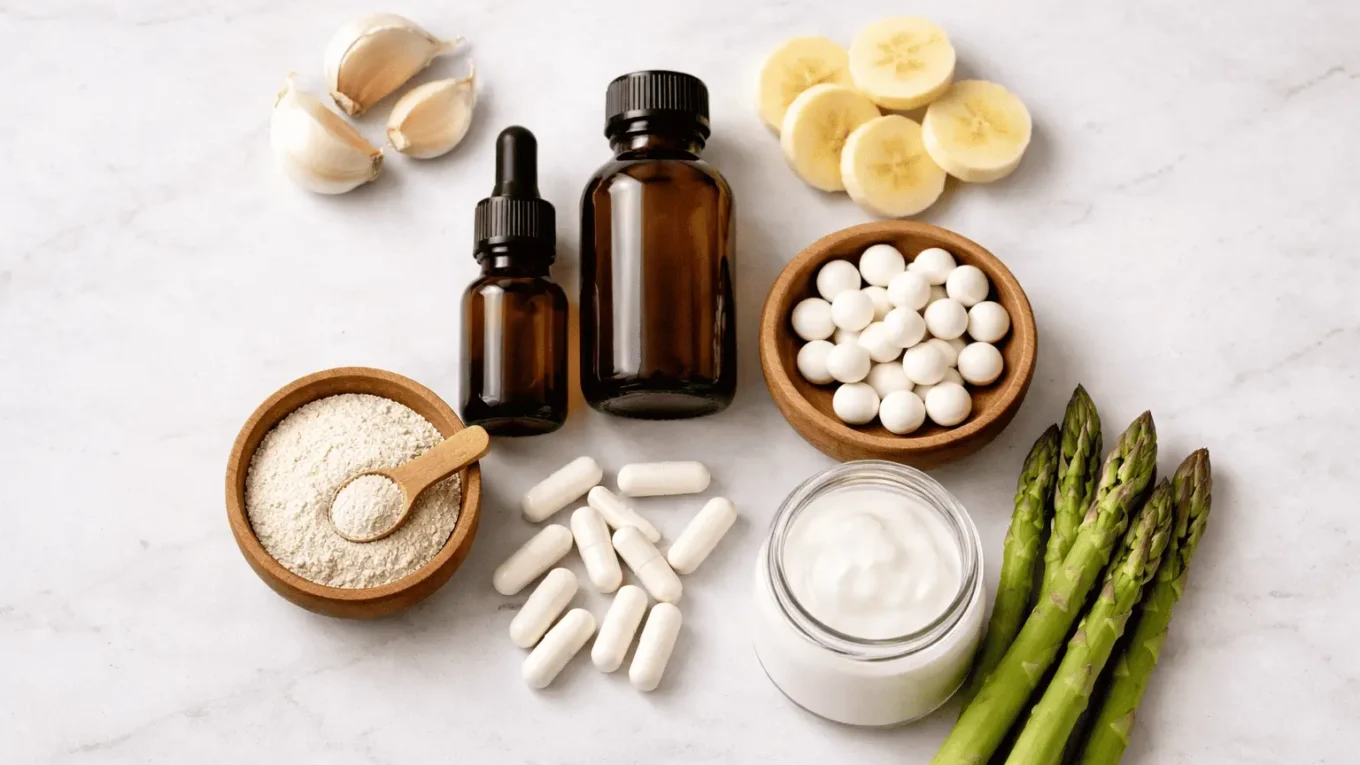
You can get prebiotics through food — garlic, onions, green bananas, chicory root, and asparagus are all excellent sources. However, if your diet is limited, a prebiotic supplement can meaningfully close the gap.
Importantly, introduce prebiotic supplements gradually. Starting with a high dose often causes temporary bloating as your gut bacteria adjust to the increased fiber.
L-Glutamine
L-glutamine is an amino acid that serves as the primary fuel source for the cells lining your intestinal wall. As a result, it plays a direct role in maintaining gut barrier integrity — which is particularly relevant for people dealing with increased intestinal permeability, often called “leaky gut.”
A study published in Clinical Nutrition found that L-glutamine supplementation significantly improved intestinal permeability markers in patients with irritable bowel syndrome. (Zhou et al., Clinical Nutrition, 2019)
A typical effective dose ranges from 5 to 10 grams per day, taken on an empty stomach. Furthermore, it’s one of the few gut health vitamins and compounds that has both strong theoretical and clinical backing for gut lining repair.
Digestive Enzymes
Digestive enzymes help break down food into absorbable nutrients — proteins, fats, and carbohydrates. For some people, particularly those with enzyme deficiencies or conditions like exocrine pancreatic insufficiency, supplementing with digestive enzymes can meaningfully reduce bloating, gas, and discomfort after meals.
That said, digestive enzyme supplements are often oversold to people who don’t actually need them. If your digestion is generally healthy, your body already produces sufficient enzymes. Instead of defaulting to a supplement, consider whether specific food intolerances — like lactase deficiency — might be the real issue, since targeted enzyme supplements like lactase are far more evidence-based than broad-spectrum enzyme blends.
Zinc Carnosine
Zinc carnosine is a compound formed by bonding zinc with the amino acid carnosine. Together, they appear to have a synergistic effect on gut lining integrity — stronger than either compound alone.
Research published in the journal Gut showed that zinc carnosine helped maintain mucosal integrity and reduced gut inflammation markers in clinical subjects. (Mahmood et al., Gut, 2007)
It’s particularly useful during gut healing protocols — for example, after a course of antibiotics or during recovery from a flare of digestive symptoms. Most clinical studies used doses of 75mg twice daily.
Magnesium
Magnesium isn’t often listed among gut support supplements — but it should be. Beyond its role in hundreds of enzymatic processes, magnesium plays a direct role in bowel regularity by drawing water into the intestines and supporting smooth muscle function in the gut wall.
Magnesium citrate and magnesium glycinate are the most bioavailable forms and the best-tolerated. In contrast, magnesium oxide — the cheapest and most common form in supplements — is poorly absorbed and largely ineffective for gut support.
For most adults, 200 to 400mg of magnesium glycinate before bed supports both bowel regularity and sleep quality simultaneously.
Gut Health Supplements That Aren’t Worth the Money
Knowing what to skip is just as valuable as knowing what to take. Here are the most overhyped products in the digestive health supplements category:
• Collagen powders for “leaky gut” — while collagen provides gut-relevant amino acids, the evidence that collagen supplements specifically repair gut permeability in humans is weak and preliminary
• Broad-spectrum enzyme blends — effective only for specific enzyme deficiencies; unnecessary for most people
• Activated charcoal — does not selectively remove toxins; can also bind to medications and beneficial nutrients
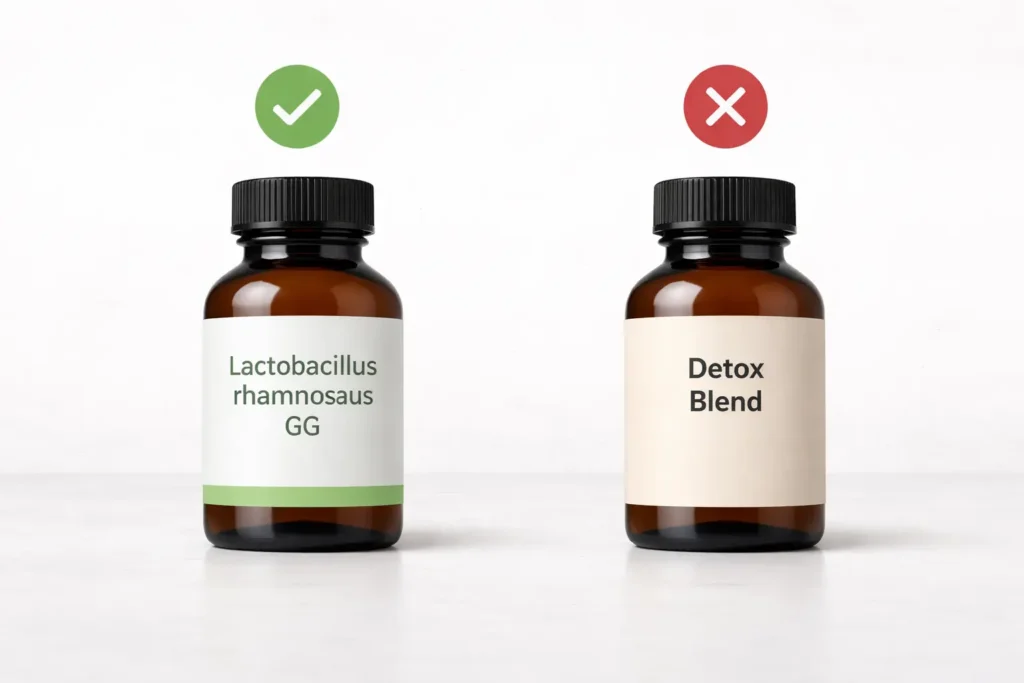
• “Detox” or “cleanse” supplements — no clinical evidence supports the concept of a gut detox; your liver and kidneys already perform this function
• High-dose antioxidant supplements — some evidence suggests excessive antioxidant supplementation can actually interfere with beneficial oxidative signaling in the gut
How to Choose the Right Gut Health Supplements
With hundreds of gut health supplements available, choosing can feel impossible. However, a few simple principles cut through the noise:
Look for strain-level specificity on probiotic labels. “Lactobacillus blend” tells you nothing. “Lactobacillus rhamnosus GG” tells you everything.
Check for CFU guarantees at expiry — not at manufacture. Many products lose significant potency before they reach you.
Choose products with minimal fillers. Artificial sweeteners like sucralose, often added to flavored supplements, can actually disrupt the microbiome you’re trying to support.
Start one supplement at a time. Adding multiple products simultaneously makes it impossible to identify what’s helping — or causing side effects.
Finally, consult a registered dietitian or gastroenterologist before starting any protocol, particularly if you have an existing digestive condition. The best supplements for gut health depend on your specific situation — not a general recommendation.
Frequently Asked Questions
Should I take probiotics every day?
For most people, yes — daily consistency produces better outcomes than occasional use. However, the right strain for your specific goal matters more than frequency alone. A well-chosen daily probiotic taken consistently outperforms a high-CFU product taken sporadically.
Can I take multiple gut health supplements together?
You can, but it’s not always necessary — and it makes it harder to identify what’s working. Instead, start with one supplement, give it 4 to 6 weeks, and assess before adding another. Probiotics and prebiotics are commonly taken together and generally safe to combine.
Are gut health vitamins different from gut health supplements?
The terms overlap, but gut health vitamins typically refer to micronutrients — like zinc, magnesium, and vitamin D — that support gut function indirectly. Supplements like probiotics and L-glutamine work more directly on the gut lining and microbiome. Both categories have a role, depending on your needs.
How long before gut supplements start working?
It varies by supplement and individual. Probiotics typically show digestive changes within 1 to 2 weeks, while deeper microbiome shifts may take 4 to 8 weeks. L-glutamine and zinc carnosine for gut lining repair usually require 4 to 12 weeks of consistent use.
Are natural food sources better than supplements?
For most people, yes — food provides a broader range of beneficial compounds that supplements can’t fully replicate. Fermented foods, prebiotic vegetables, and a diverse plant-based diet are more effective long-term foundations than any supplement stack. However, supplements fill specific gaps when diet alone isn’t enough.
Foods for Gut Health: The Best and Worst for Your Microbiome.
The Bottom Line
Navigating gut health supplements doesn’t have to be complicated. Focus on the options with real clinical evidence — probiotics with named strains, prebiotics, L-glutamine, and zinc carnosine — and skip the overhyped products that promise more than the science can deliver.
Supplements work best as targeted additions to a strong foundation of diet, sleep, and stress management. Therefore, build that foundation first — and let supplements do what they’re actually designed to do: fill specific gaps, not replace good habits.
How to Improve Gut Health: The Complete Guide.
Scientific References
Szajewska, H., & Kolodziej, M. (2015). Systematic review with meta-analysis: Lactobacillus rhamnosus GG in the prevention of antibiotic-associated diarrhoea in children and adults. Alimentary Pharmacology & Therapeutics, 42(10), 1149–1157.
Zhou, Q., et al. (2019). Randomised placebo-controlled trial of dietary glutamine supplements for postinfectious irritable bowel syndrome. Clinical Nutrition, 38(4), 1505–1512.
Mahmood, A., et al. (2007). Zinc carnosine, a health food supplement that stabilises small bowel integrity and stimulates gut repair processes. Gut, 56(2), 168–175.
Wastyk, H.C., et al. (2021). Gut-microbiota-targeted diets modulate human immune status. Cell, 184(16), 4137–4153.
Hill, C., et al. (2014). Expert consensus document on the scope and appropriate use of the term probiotic. Nature Reviews Microbiology, 12(8), 572–578.
Disclaimer: This article is for informational purposes only and does not constitute medical advice. Always consult a qualified healthcare provider before starting any supplement regimen.