
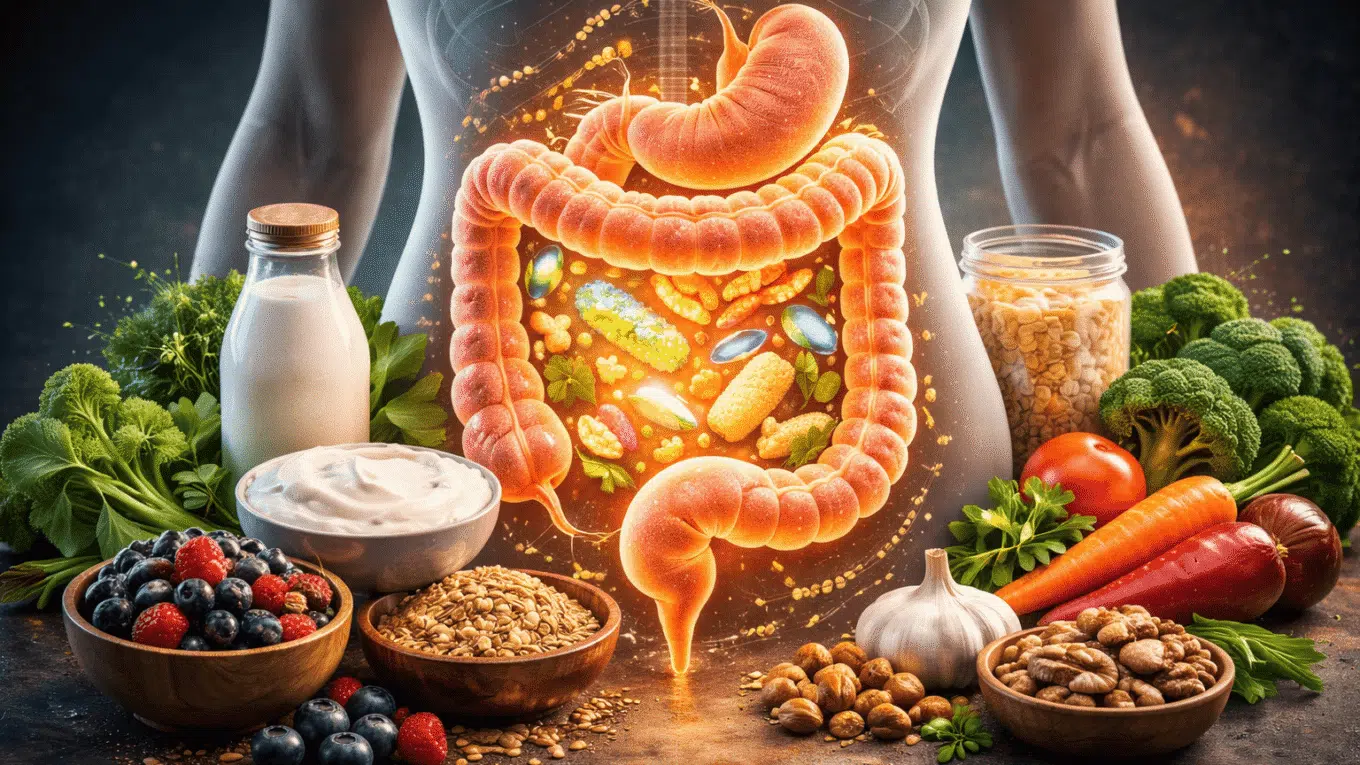
Foods for Gut Health: The Best and Worst for Your Microbiome
When it comes to foods for gut health, what you eat every day is either feeding your microbiome or quietly undermining it. In fact, research shows your gut bacteria begin shifting in response to dietary changes within just 3 to 4 days — which means every meal is an opportunity to move in the right direction.
Most people focus on what to add — more fiber, more probiotics, more greens. However, what you remove matters just as much. Some of the most common foods in a typical Western diet are actively disrupting your gut balance, often without any obvious symptoms until the damage is done.
In this guide, you’ll learn exactly which gut healing foods to prioritize, which ones to cut back on, and how to build a daily eating pattern your microbiome will actually thrive on.
Why Food Is the Most Powerful Tool for Gut Health
Your gut microbiome is shaped more by diet than by almost any other factor. Think of it like a living ecosystem — the species that thrive are the ones you consistently feed.
A landmark study from Stanford found that dietary changes can alter microbiome composition faster than most people expect. (Wastyk et al., Cell, 2021) Furthermore, the diversity of your diet directly predicts the diversity of your gut bacteria — and diversity is one of the strongest markers of a healthy microbiome.
Simply put, food isn’t just fuel — choosing the right foods for gut health is the most direct signal you send your microbiome daily. For your gut, it’s information.
choosing the right foods for gut health is the most direct signal you send your microbiome daily — especially when you follow a structured plan to improve gut health naturally
The Best Foods for Gut Health — What to Eat Every Day
Not all gut-friendly foods work the same way, and understanding the difference matters. Choosing the right foods for gut health means combining two strategies — introducing beneficial bacteria and feeding the ones already there. Some options, like fermented foods, introduce live bacteria directly. Others, like prebiotic vegetables, nourish the beneficial strains already living in your gut. The most effective approach combines both — consistently, every day.
Fermented Foods
Fermented foods are among the most powerful options available. They introduce live beneficial bacteria directly into your digestive system — and the science backs this up strongly.
A 2021 Stanford study found that people who ate a diet high in fermented foods significantly increased their microbiome diversity and reduced inflammatory markers — results that a high-fiber diet alone didn’t achieve as quickly. (Wastyk et al., Cell, 2021)
The best options to include daily:
• Yogurt — plain, with live and active cultures on the label
• Kefir — contains up to 61 microbial species; great even for people mildly lactose sensitive
• Kimchi and sauerkraut — one tablespoon per meal is enough
• Miso — add after cooking to preserve the live bacteria
• Kombucha — choose raw, unpasteurized versions with under 5g of sugar
Fermented foods are one of the most effective natural sources of beneficial bacteria, and they can be even more powerful when combined with the right probiotics for gut health.
High-Fiber Plant Foods
Indeed, fiber is the primary food source for your beneficial gut bacteria. Without adequate fiber, they simply don’t thrive — and some strains begin to feed on your gut lining instead, which increases intestinal permeability over time.
The American Gut Project found that people eating 30 or more different plant foods per week had significantly more diverse microbiomes than those eating fewer than 10. Variety matters as much as quantity.
Focus on:
• Legumes — lentils, black beans, chickpeas
• Whole grains — oats, quinoa, barley, brown rice
• Vegetables — especially garlic, onions, leeks, asparagus, and Jerusalem artichokes
• Fruits — berries, apples, bananas (especially slightly underripe ones)
• Nuts and seeds — walnuts, flaxseeds, chia seeds
Prebiotic-Rich Foods
Prebiotics are a specific type of fiber that selectively feeds beneficial bacteria. They’re different from general fiber — more targeted, more potent for microbiome support.
Moreover, some of the richest prebiotic sources include:
• Garlic and onions — contain inulin and fructooligosaccharides
• Green bananas — high in resistant starch, which feeds Bifidobacterium strains
• Chicory root — one of the highest natural sources of inulin
• Asparagus — feeds Lactobacillus and Bifidobacterium species
• Jerusalem artichokes — exceptionally high prebiotic content
Importantly, if you’re new to prebiotic-rich foods, introduce them gradually. Adding too much too fast can cause temporary bloating as your gut bacteria adjust.
H3: Polyphenol-Rich Foods
Furthermore, polyphenols are plant compounds that act as fuel for beneficial gut bacteria — particularly Bifidobacterium and Lactobacillus strains. What makes them especially interesting is that most polyphenols aren’t absorbed in the small intestine, so they travel to the colon where gut bacteria ferment them into beneficial compounds.
Rich sources include:
• Blueberries and dark berries
• Dark chocolate (70%+ cacao)
• Green tea and black tea
• Extra virgin olive oil
• Red grapes and pomegranate
Even moderate consumption of these foods — a handful of berries, a square of dark chocolate, a drizzle of olive oil — adds up meaningfully over time.
The Worst Foods for Gut Health — What to Cut Back On
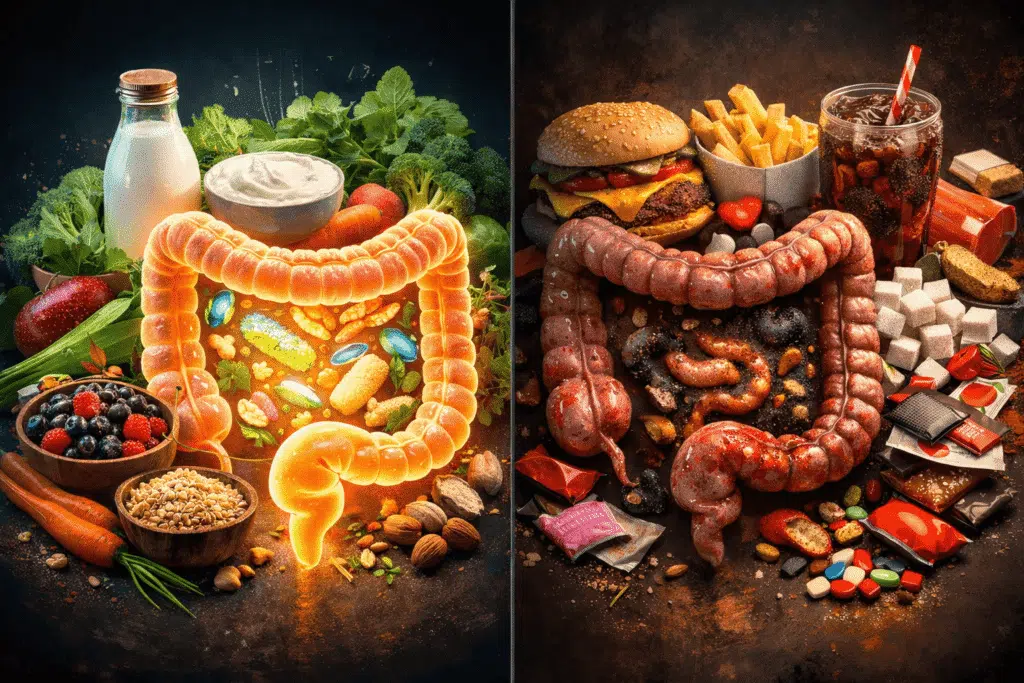
Just as some foods actively support your microbiome, others consistently disrupt it. However, the goal here isn’t perfection — it’s awareness. Knowing what works against your gut allows you to make smarter trade-offs.
Ultra-Processed Foods
Ultra-processed foods are the single biggest threat to gut health in the modern diet. Engineered with artificial emulsifiers, refined oils, preservatives, and high-fructose corn syrup, these products disrupt microbial balance in multiple ways simultaneously.
Research from the Sonnenburg Lab at Stanford showed that emulsifiers like carboxymethylcellulose and polysorbate-80 — found in many packaged foods — can degrade the gut’s protective mucus layer and promote bacterial imbalance. (Chassaing et al., Nature, 2015)
The most disruptive examples:
• Packaged snack foods and crackers
• Fast food and fried items
• Processed meats like hot dogs and deli slices
• Flavored yogurts with added sugar
• Soft drinks and sweetened beverages
Refined Sugar
Excess sugar is one of the fastest ways to shift your microbiome in the wrong direction. It selectively feeds less beneficial bacterial species — particularly Candida and certain Firmicutes strains — while starving the Bifidobacterium and Lactobacillus populations your gut depends on.
A diet high in refined sugar has also been linked to increased intestinal permeability — the condition often referred to as “leaky gut” — which allows bacterial byproducts to enter the bloodstream and trigger systemic inflammation. (Leclercq et al., Gut, 2014)
This doesn’t mean eliminating all sugar. Rather, it means being more selective — choosing whole fruits over juice, and plain foods over sweetened versions wherever possible.
Artificial Sweeteners
This one surprises most people — and understandably so. Artificial sweeteners like saccharin, sucralose, and aspartame are often marketed as gut-friendly alternatives to sugar — but the evidence suggests otherwise.
A 2022 study published in Cell found that consumption of saccharin and sucralose significantly altered gut microbiome composition and impaired glycemic response in healthy adults. (Suez et al., Cell, 2022) In other words, these sweeteners aren’t neutral — they actively change your gut environment in measurable ways.
If you need a sweetener, stevia and monk fruit appear to have a more neutral effect on the microbiome based on current evidence.
Alcohol
Regular or heavy alcohol consumption is one of the more well-documented disruptors of gut health. It reduces microbial diversity, increases intestinal permeability, and selectively promotes the growth of harmful bacterial species.
However, moderate consumption — particularly of red wine — has shown some mild prebiotic effects due to its polyphenol content. That said, this benefit is modest and comes with real trade-offs. For most people, the net effect of regular alcohol on gut health is negative.
Refined Carbohydrates
In contrast, white bread, white rice, and pasta made from refined flour digest so quickly that they’re largely absorbed before reaching the colon — leaving your gut bacteria with little to feed on. Over time, a diet heavy in refined carbs essentially starves your microbiome.
Swapping even half of your refined grain intake for whole grain alternatives — whole wheat bread, brown rice, oats — meaningfully increases the fiber your gut bacteria receive every day.
Gut Healthy Foods — A Practical Daily Pattern for Your Microbiome
Instead of thinking in terms of a rigid diet, think of gut-friendly eating as a daily pattern. Here’s what that looks like in practice — simple, sustainable, and easy to build on:
Morning
• Oats with berries and a spoonful of ground flaxseed
• Plain yogurt or kefir alongside or instead of breakfast
Midday
• A large salad with leafy greens, legumes, olive oil, and a variety of colorful vegetables
• A small serving of sauerkraut or kimchi on the side
Afternoon snack
• A handful of walnuts or almonds
• A piece of fruit — apple, banana, or a handful of blueberries
Evening
• Lean protein with roasted vegetables and a whole grain
• Miso soup as a starter, or a small serving of kombucha with the meal
This isn’t a strict meal plan — it’s a template. The goal is variety, consistency, and crowding out the disruptive foods naturally.
Common Mistakes With Foods for Gut Health
Even people who eat reasonably well often fall into a few patterns that quietly undermine their microbiome. Here are the most common mistakes when it comes to foods for gut health:
• Eating the same foods every day — even healthy foods, eaten repeatedly, limit microbial diversity
• Relying on probiotic supplements instead of food — supplements are targeted; food builds a broader ecosystem
• Treating “organic” as automatically gut-friendly — organic ultra-processed food is still ultra-processed
• Adding fermented foods but keeping sugar high — you can’t out-ferment a high-sugar diet
• Ignoring prebiotic foods — probiotics without prebiotics is like planting seeds without watering them
Frequently Asked Questions
What is the single best food for gut health?
There isn’t one — and that’s actually the whole point. When it comes to foods for gut health, diversity matters more than any single superfood. However, if forced to choose, fermented foods like kefir and kimchi consistently show the strongest evidence for rapidly improving microbiome diversity — especially when combined with the right probiotics for gut health.
Are bananas good for gut health?
Yes, especially slightly underripe ones. They’re high in resistant starch, which acts as a prebiotic and selectively feeds beneficial Bifidobacterium strains. Ripe bananas still offer fiber and are gut-friendly, just with less resistant starch.
Is coffee bad for gut health?
Interestingly, no — at least not for most people. Coffee contains polyphenols that feed beneficial gut bacteria, and moderate consumption has been associated with greater microbiome diversity in several studies. However, adding large amounts of sugar or artificial creamers offsets the benefit.
How long does it take for diet changes to affect the gut?
In fact, research shows microbiome composition can begin shifting within 3 to 4 days of dietary changes. However, meaningful, lasting shifts in microbial diversity typically take several weeks of consistent eating patterns.
Can I eat gluten if I don’t have celiac disease?
For most people, specifically those without celiac disease or non-celiac gluten sensitivity, moderate gluten consumption doesn’t appear to harm the gut. However, foods high in refined gluten — white bread, pastries — are often also low in fiber, which is the real issue for gut health.
The Bottom Line
The relationship between foods for gut health and your microbiome is direct, powerful, and — most importantly — within your control every single day.
Therefore, focus on adding before restricting. Build your plate around fermented foods, diverse plants, prebiotic-rich vegetables, and polyphenol sources. Then, gradually reduce ultra-processed foods, refined sugar, and artificial sweeteners — not through restriction, but by crowding them out with better options.
Ultimately, your microbiome responds to what you do consistently, not perfectly. Start with one addition this week — a daily serving of kefir, an extra vegetable at lunch, a handful of walnuts as a snack. Small changes, done every day, are what actually move the needle.
Small changes, done every day, are what actually move the needle — and if you’re ready to take the next step, here’s a complete plan to improve gut health naturally.
Scientific References
Wastyk, H.C., et al. (2021). Gut-microbiota-targeted diets modulate human immune status. Cell, 184(16), 4137–4153.
Chassaing, B., et al. (2015). Dietary emulsifiers impact the mouse gut microbiota promoting colitis and metabolic syndrome. Nature, 519, 92–96.
Leclercq, S., et al. (2014). Intestinal permeability, gut-bacterial dysbiosis, and behavioral markers of alcohol-dependence severity. PNAS, 111(42), E4485–E4493.
Suez, J., et al. (2022). Personalized microbiome-driven effects of non-nutritive sweeteners on human glucose tolerance. Cell, 185(18), 3307–3328.
David, L.A., et al. (2014). Diet rapidly and reproducibly alters the human gut microbiome. Nature, 505, 559–563.
Disclaimer: This article is for informational purposes only and does not constitute medical advice. Always consult a qualified healthcare provider for personalized guidance.
2 thoughts on “Foods for Gut Health: The Best and Worst for Your Microbiome”